A different kind of teamwork: strengthening regional coordination through EMTCC training
11 Dec 2025
Written by Carla Yeung
Behind every well-coordinated emergency response are skilled professionals working quietly to connect teams, resources and decisions. The recent Emergency Medical Team Coordination Cell (EMTCC) Training brought together representatives from across the Western Pacific region and Timor-Leste to strengthen the region’s ability to lead and coordinate during health emergencies — building national leadership and regional collaboration for future responses.
Delivered in partnership with the World Health Organization (WHO) Headquarters, WHO Western Pacific Region (WHO WPRO) and the National Critical Care and Trauma Response Centre’s (NCCTRC) Regional Engagement Program (REP), the course combined global best practice with regional experience to reflect the realities of emergency response across the region.

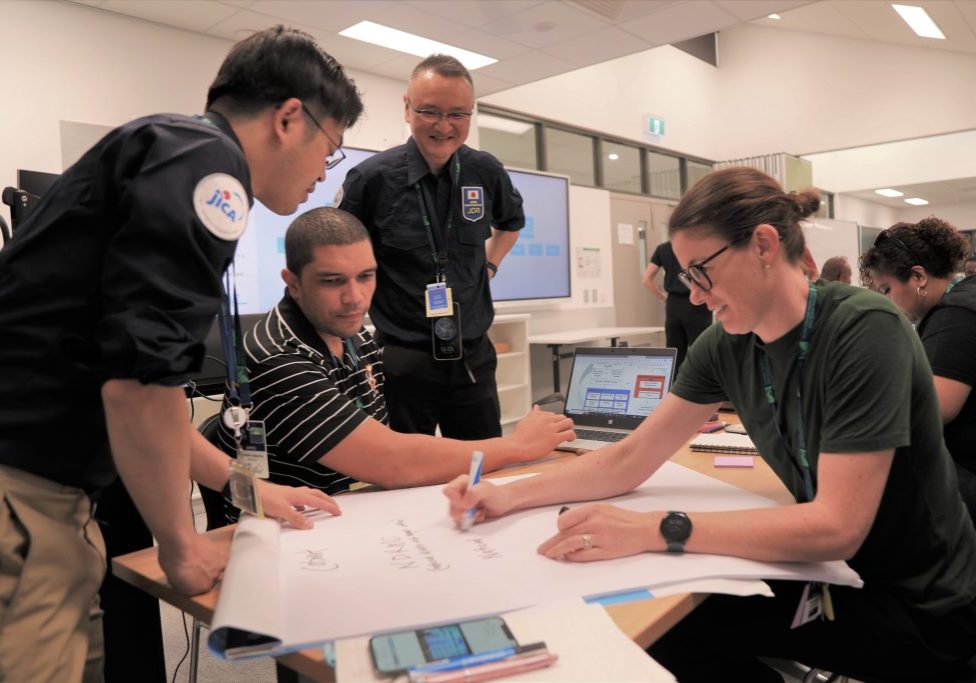
Through a hybrid learning model combining online webinars and an intensive four-day residential component in Darwin, participants explored the EMTCC lifecycle — from preparedness and activation through to operations, transition and closure. The course integrated thematic lectures, tabletop exercises, simulation drills and interactive role plays, allowing participants to apply coordination tools to region-specific scenarios such as cyclones, earthquakes and outbreaks.
The EMTCC is a critical operational structure that ensures the effective deployment of national and international Emergency Medical Teams (EMTs) during health emergencies. It facilitates the registration, tasking, monitoring and reporting of EMTs to optimise clinical and public health outcomes while avoiding duplication and inefficiencies.
“Building coordination capacity within countries is essential for an effective regional response,” said Anthony Cook, NCCTRC’s Director REP. Through this training, participants not only gained the technical skills to manage EMT Coordination Cells but also strengthened the partnerships that make regional cooperation possible during emergencies. When the next emergency happens, they’ll know not only what to do, but who to call — and that’s the foundation of a coordinated regional response.
It’s also about building the next generation of regional leaders who can guide their teams through complex emergencies with confidence and collaboration.
“Participants leave this course with practical tools and strong professional connections,” said Chandra Gilmore, WHO’s Technical Officer for Health Emergency Surge Workforce in the Western Pacific. “They return home with a clearer understanding of how coordination works — how to bring information, logistics and clinical teams together so decisions are made quickly and effectively to improve patient care after emergencies. That shared understanding strengthens collective preparedness across the Western Pacific and builds trust between teams long before an emergency begins.”
Participants represented Ministries of Health, EMTs and disaster management agencies from Fiji, Japan, New Zealand, Papua New Guinea, Samoa, the Solomon Islands, Timor-Leste, Tonga, Vanuatu and Australia. Working in country groups, participants shared common challenges and compared national approaches to disaster response, highlighting both the similarities and differences in coordination systems across the region.
Many participants said the training gave them the chance to learn not only from facilitators but also from each other. They described how hearing different national perspectives deepened their understanding of coordination and helped them see how countries could work together more effectively during future health emergencies.
They also reflected on how different the EMTCC training felt compared to their previous experiences as EMT members. For those accustomed to working directly with patients, the shift to a coordination role required a new way of thinking — one that focused less on immediate clinical care and more on strategic decision-making, information flow and resource management at the national level. Many described it as a different kind of teamwork — stepping back from working with patients directly to see the bigger picture and support the entire response effort.
Adapted to the region’s unique context — from remote island settings and climate pressures to differing health system capacities — the training encouraged collaboration and exchange among future EMTCC leaders.
p
Held for the third time in the Western-Pacific region, the course aims to build a cadre of personnel capable of supporting or leading EMT coordination nationally or regionally. It provides participants with the knowledge and practical frameworks needed to facilitate information flow, decision-making and quality assurance in complex emergency environments.
Led by experienced faculty from WHO, Japan, Papua New Guinea, Vanuatu and Australia, whose expertise and mentorship enriched the learning experience, the course gave participants valuable insights drawn from real-world deployments and years of leadership within the global EMTCC community.
We were fortunate to have such respected leaders guiding this course. Their experience and generosity in sharing knowledge helped bridge global expertise with local realities, creating an invaluable learning experience for everyone involved.
As part of the course, the NCCTRC and WHO are also conducting research to evaluate the longer-term impact. Over the next two years, this project will assess how EMTCC course participants apply their learning to strengthen coordination capability and regional response readiness. Findings from this work will inform future EMTCC training in the Western Pacific Region, contributing important cultural context and innovation to the WHO EMT initiative.
The course concluded with a talanoa session, using the Pacific tradition of open and respectful collective dialogue to reflect on shared learning. Many expressed gratitude for the connections they had made and the shared commitment to strengthening coordination across the Western Pacific.