Written by Maya Cherian, Public Health Medical Officer
Reviewed by Dr Nick Walsh MD PhD(epi) BScMed(hons) MPH FAFPHM FAChAM
Dengue, otherwise known as break bone fever, has been circulating globally for centuries. The first suspected outbreak was reported in 1635, with documentation of transmission by the Aedes Aegypti mosquito at the beginning of the 19th century.1 In recent years there has been a global increase in the number of dengue cases worldwide, although noting most cases are asymptomatic or mild the actual number of dengue cases occurring worldwide is likely to be underreported. Dengue is classified as a Neglected Tropical Disease (NTD) by the World Health Organization (WHO) and ongoing work is being undertaken to further control dengue.
Virus
Dengue virus (DENV) has four serotypes and is from the genus, flavivirus. Following infection, lifelong immunity is gained against the infected serotype and short-term immunity is gained against the other serotypes.
Transmission
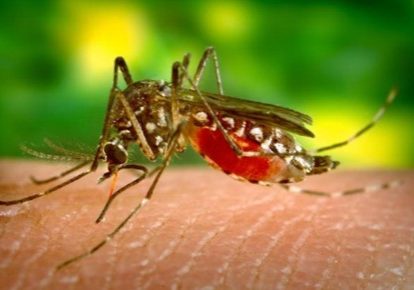
DENV is transmitted by the female A. Agypti mosquito, with transmission also occurring by other mosquitoes from the flavivirus genus such as Aedes Albopictus mosquito. Dengue is transmitted via a human, mosquito, human transmission cycle. The ideal temperature for dengue transmission ranges from 25 to 28 degrees Celsius.2. Infected mosquitoes remain capable of transmission throughout their lifespan, which lasts approximately 3 to 4 weeks, and they can infect humans 8 to 12 days after becoming infected themselves.2
Due to the approximate seven day viraemia for both asymptomatic and symptomatic persons, transmission can occur from human to mosquito during this time period. Blood borne transmission3 is also possible, with known perinatal transmission although no congenital transmission.3
Epidemiology
Dengue Virus
DENV is endemic in the tropics and subtropics, currently established in 167 countries globally. Dengue cases have significantly increased in the past year, with 2023 seeing over 6 million cases (historical high) and over 6000 dengue-related deaths in 92 countries/territories.4 Since January 2024, there have been over 5 million reported cases and over 2000 deaths globally.4 Asia represents 70% of the global disease burden.
Mosquito
Historically the A. Agypti mosquito is found in tropical and subtropical regions, however over time geographical spread has increased with populations now found throughout Europe, the southern cone of South America and the United States (Figure 1).5

Clinical symptoms
Dengue is commonly referred to as break bone fever, due to the fever, and muscle and joint pain associated with infection. Presentation is characterised by three phases, the febrile, critical and convalescent phase.
The majority of DENV infections (40-80%) are asymptomatic. Symptomatic presentations during the febrile phase are characterised by a biphasic fever lasting 2-7 days. Other symptoms include headache, bone, joint and muscle pain, rash and minor haemorrhagic manifestations.3 During the late febrile phase warning signs of progression to severe dengue can occur (Figure 2).
The critical phase of dengue commences when fever decreases to < 38°C (defervescence). This usually lasts for 24-48hrs. The majority of patients recover during this phase, however some patients progress to severe dengue (dengue haemorrhagic fever), characterised by bleeding, organ involvement or plasma leakage. This coagulopathy is a result of transient immune mediate cytokine release and bone marrow suppression during infection. Irreversible shock and subsequent death can occur following severe dengue. The risk of severe dengue is greater following subsequent infections with DENV however it can also occur during the first infection.
During the convalescent phase patients recover, the rash desquamate and patient well-being improves.

Management
No specific treatment is available for dengue. Patients receive symptomatic management with paracetamol and careful fluid support.
Vaccine
Currently there is no vaccination available for the prevention of primary dengue infection. Dengvaxia®8 is currently the only available vaccine in the world, available for the prevention of secondary dengue. A complete course of vaccination requires three doses, to be given at 0-, 6- and 12-months. In persons without a prior exposure, Dengvaxia® acts like a primary infection. It results in an 80% reduction in severe dengue outcomes.9
The use of Dengvaxia® vaccine is only used in rare occasions in Australia with access via the Therapeutic Goods Administration Special Access Scheme10 on a case-by-case basis. Individuals are required to meet the following criteria8:
- aged 9–45 years; and
- have had previous dengue infection; and
- are intending to reside in highly dengue-endemic regions for an extended period; and
- only if the potential benefits are deemed to outweigh the risks.
Prevention
Dengue prevention involves surveillance, preventing bites or undertaking mosquito control. Bites are most common in daylight hours.
To prevent bites it is advised that:
- Windows within houses are protected with flyscreens
- wear light coloured clothing
- empty out containers in and around properties that could pool water. This includes checking unused rainwater tanks, boards or pools and
- use insect repellent such as DEET (diethyl toluamide) or picaridin.
Cases of dengue are advised to avoid being bitten by mosquitoes for up to 12 days from onset of illness7 due to the risk of onward transmission to other humans if bitten by a mosquito vector while viraemic. This is particularly important in non-endemic areas (e.g. outside of far-north Queensland in Australia), to prevent infection of susceptible mosquitoes and subsequent onward transmission.
Mosquito control
Adult mosquito control11
- Interior residual spray (IRS) of viraemic contact addresses, their nearest neighbours and other high risk properties as determined by the medical entomologist, and
- deployment of lethal ovitraps in large arrays within the specified area, and
- barrier and/or harbourage spraying.
Larval control11
- Application of residual chemicals to all appropriate containers capable of holding water within the response area as determined by the medical entomologist, and
- source reduction – removal or mosquito-proofing of water-bearing containers.
Surveillance
Disease Surveillance
- Dengue surveillance with an emphasis on cases outside of known endemic cases and overseas acquired cases.
Mosquito Surveillance
- Surveillance of aegypti and A. albopictus mosquitoes, monitoring presence and number.
Eradication
Dengue has been included in the Ending the neglect to attain the Sustainable Development Goals: A road map for neglected tropical diseases 2021–2030.12
Dengue has been targeted for control by continued development of vaccine, continued development of evidence based on effectiveness of vector control strategies and continued collaboration to reduce mosquito habitats, with the aim to reduce case fatality rate to 0% by 2030.
References:
- Dengue virus disease | ScienceDirect
- Dengue Transmission | Nature
- Dengue | CDC Yellow Book 2024
- Dengue worldwide overview | ECDC
- Climate change and viral emergence: evidence from Aedes-borne arboviruses
- Global Distribution of Aedes aegypti and Aedes albopictus in a Climate Change Scenario of Regional Rivalry
- Dengue | CDNA SoNG
- Advice on the use of dengvaxia for Australians | ATAGI
- Sridhar S, Luedtke A, Langevin E, et al. Effect of dengue serostatus on dengue vaccine safety and efficacy. N Engl J Med 2018;379:327-340
- Special Access Scheme
- Queensland Dengue management plan 2015-2020
- Ending the neglect to attain the Sustainable Development Goals: A road map for neglected tropical diseases 2021–2030

Dr Maya Cherian
Public Health Physician