Laying the foundations for simulation-based training in Timor-Leste
06 Oct 2025
Written by Carla Yeung
The Instituto Nacional de Saúde Pública de Timor-Leste (INSP-TL) plays a central role in strengthening Timor-Leste’s health system by training doctors, nurses and other health professionals, particularly in the area of primary healthcare, emergency and critical care. Over the years, INSP-TL and the National Critical Care and Trauma Response Centre’s (NCCTRC) Regional Engagement Program (REP) have worked together to build local training capacity, delivering courses such as the Rehabilitation in Disasters and Emergencies course, the Essentials of Critical Care Course, Trauma in Timor-Leste course and the suite of Major Incident Medical Management and Support (MIMMS) courses, while supporting local faculty to lead and co-facilitate training wherever possible.
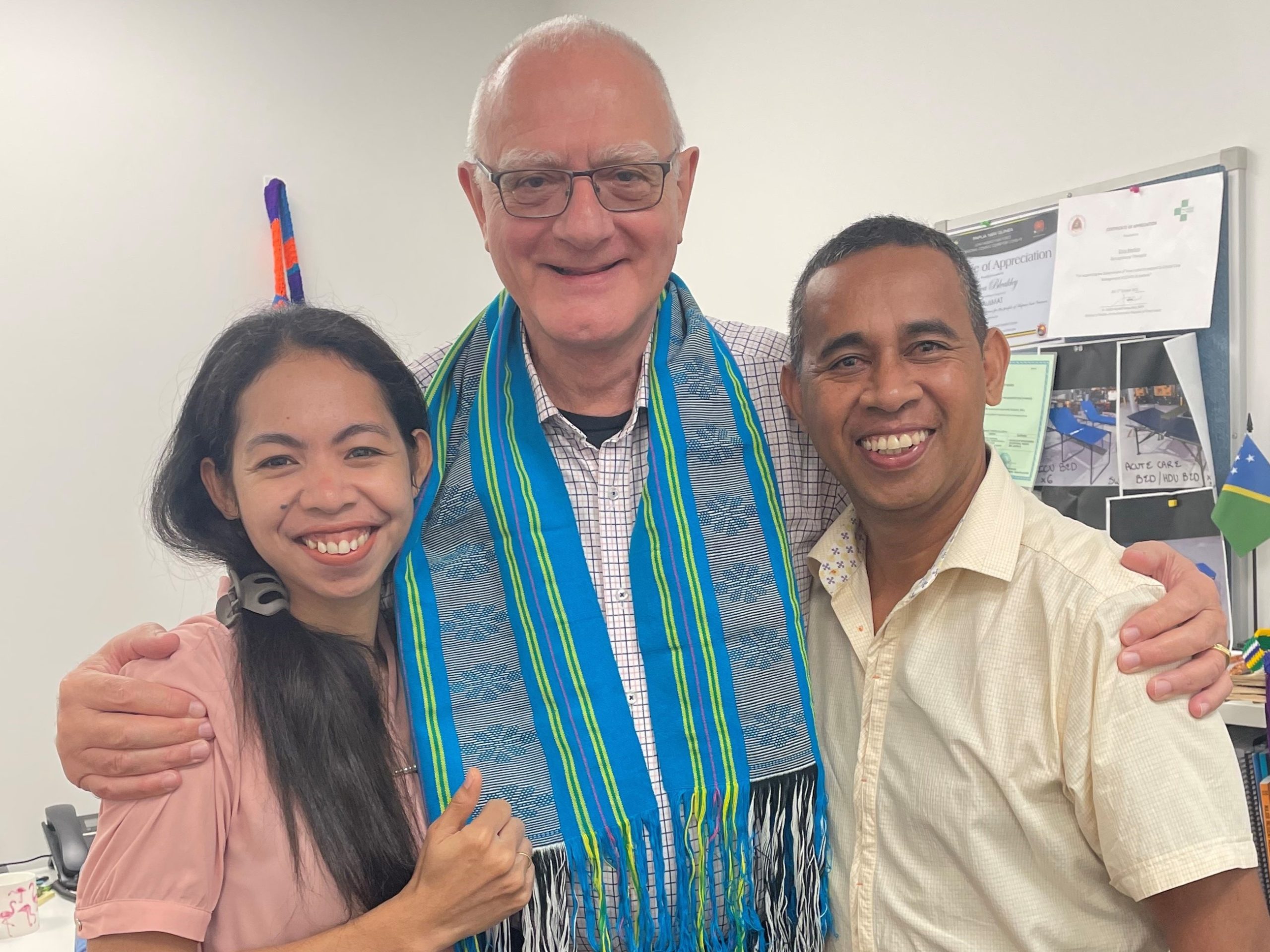
As part of this partnership, Registered Nurse and National Training Lead Francisco Borges and Dr Aloto Ximenes Belo Amaral visited Darwin for a two-week observership. Funded by the Australian Government’s Department of Foreign Affairs and Trade (DFAT) through REP, the observership was supported by the NCCTRC’s Trauma Service, St John Ambulance, Clinical Learning Education and Research Service (CLEaRS) and Flinders University. The placement gave the pair the opportunity to expand their knowledge of simulation-based training and explore how it can be applied in Timor-Leste.
The World Health Organization (WHO) has provided long standing support to INSP-TL, supplying infrastructure and simulation equipment to INSP-TL, including mannequins and associated devices to support the education of health professionals. While this represented a significant investment, the team faced challenges in making the most of the resources. Without the technical knowledge to operate, connect and maintain the equipment, there was a risk it would remain under-used.
“We’ve been given the opportunity to establish a simulation centre at INSP-TL and we’ve received donated equipment,” Borges explained. “But to use it well we need more than a mannequin. We need to learn how to write a course syllabus with scenarios, connect the devices, run simulations, debrief, and maintain the gear.”
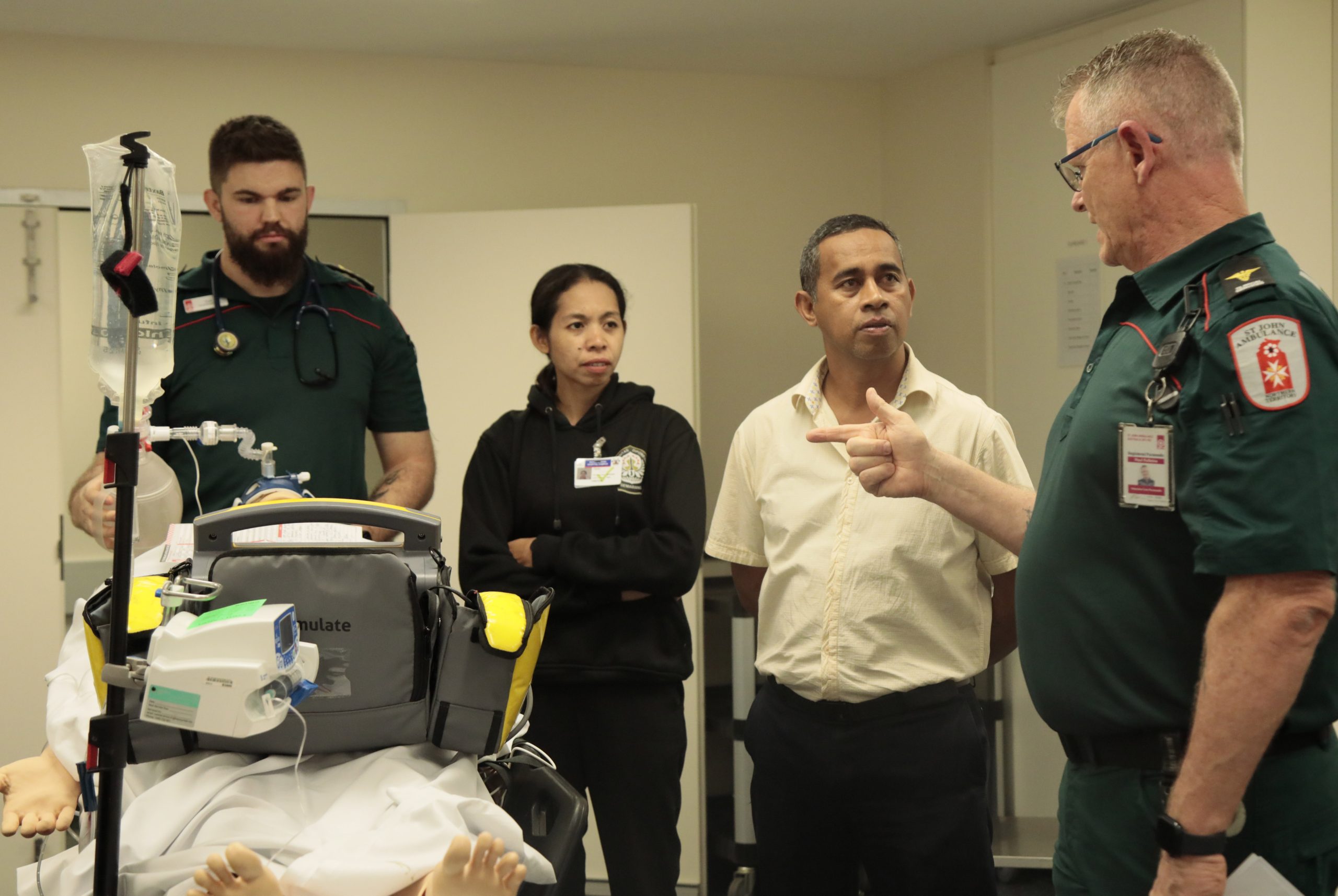
For both Borges and Dr Aloto, the observership was an opportunity to gain the knowledge needed to develop and operate simulation-based training programs sustainably in Timor-Leste.
During their two weeks in Darwin, the pair observed a broad range of activities:
- Trauma Service and REP team – learnt how simulation sessions are designed, prepared and facilitated.
- St John Ambulance – observed pre-hospital simulations and structured patient handovers to hospital emergency departments.
- Flinders University – visited simulation teaching facilities, exploring how low fidelity materials can be applied to deliver meaningful improvements in learners’ skill acquisition.
- CLEaRS – observed an Advanced Life Support Course which will inform the development of a contextualised version for Timor-Leste.
They also spent time with technical staff responsible for maintaining equipment, gaining practical tips on cleaning, troubleshooting and creating low-cost training aids that they can apply back home.
For Borges, the biggest insight was how to plan simulations from the ground up. “We were very interested in observing how simulations are run – but we were even more excited to learn how to design a simulation. That’s a big step for us,” he said.
Dr Aloto was struck by the facilitation approach. “They create conditions that build confidence, especially for younger participants or participants early in their careers,” she said. “Positive feedback and clear guidance help people to grow quickly.”
The visit to St John Ambulance also highlighted the importance of teamwork. “The smooth flow from pre-hospital care to hospital admission is exactly the coordination we want our teams to practise,” Borges noted.
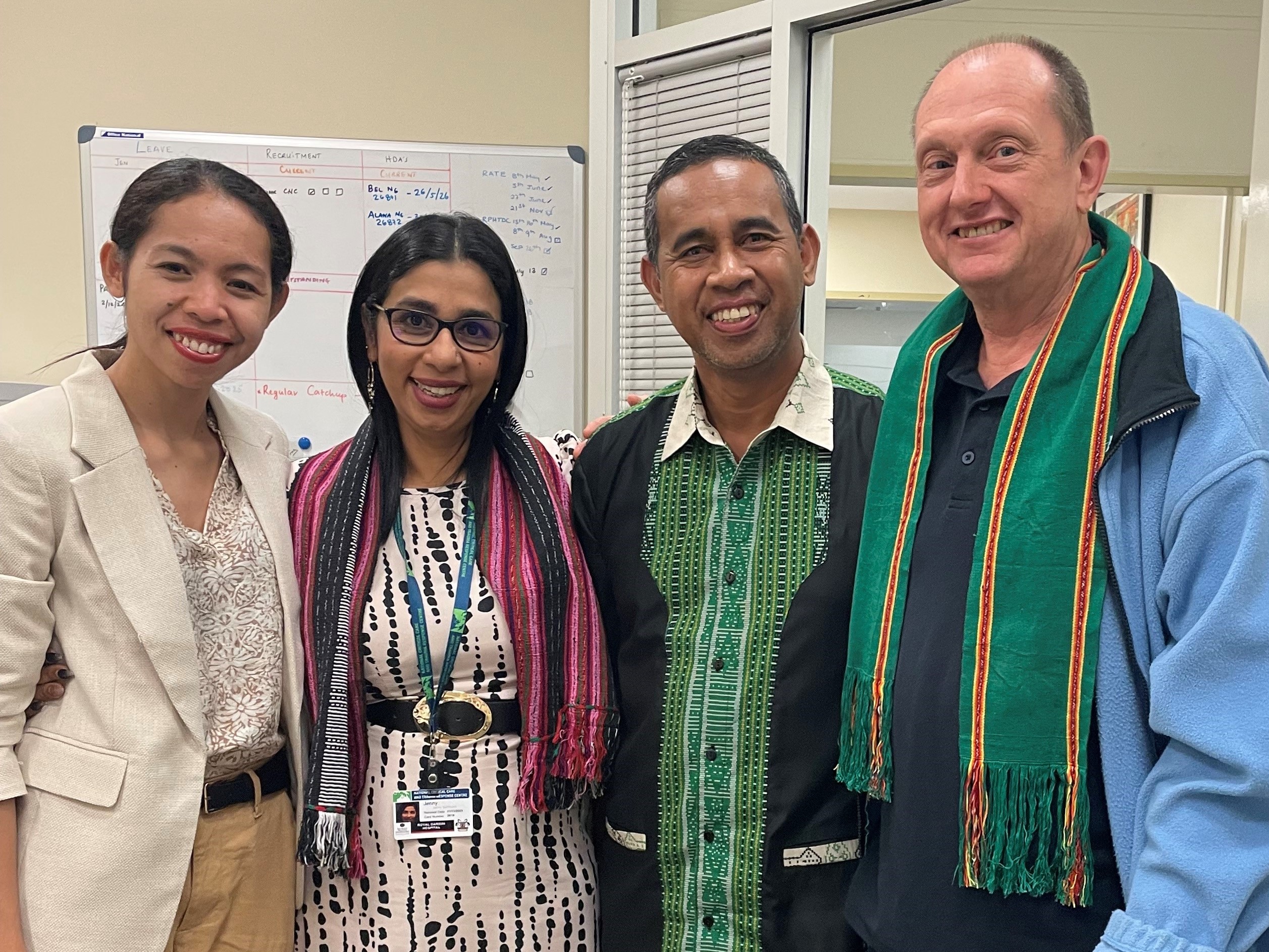
Simulation training is still relatively new in primary healthcare in Timor-Leste but both Borges and Dr Aloto are committed to making it a routine part of their course offerings. The observership has given them the technical skills and teaching approaches needed to take the next step—integrating team-based simulation into INSP-TL training so health professionals can gain practical, hands-on experience in managing emergencies.
INSP-TL now plans to integrate team-based simulation into its future courses, ensuring health professionals across Timor-Leste have the chance to practise managing emergencies in realistic, hands-on scenarios.
This observership has given us the practical steps to expand simulation-based training in Timor-Leste.
“Even small interventions, when backed by the right knowledge, can save lives,” Borges said.
Dr Aloto agreed, adding: “When everyone knows their role and communicates clearly, patient care becomes safer and faster. Even simple team-based practice can save critical minutes.”