Training for the unexpected: AUSMAT prepares with Cat III and Tyvek suits
06 Oct 2025
Written by Erika Lu
When AUSMAT members are deployed to health emergencies, they need to be ready for any situation — from disasters to infectious disease outbreaks. Part of that readiness involves specialist training in the use of Category III (Cat III) and Tyvek protective suits, which provide a vital layer of defence in high-risk infectious disease environments.
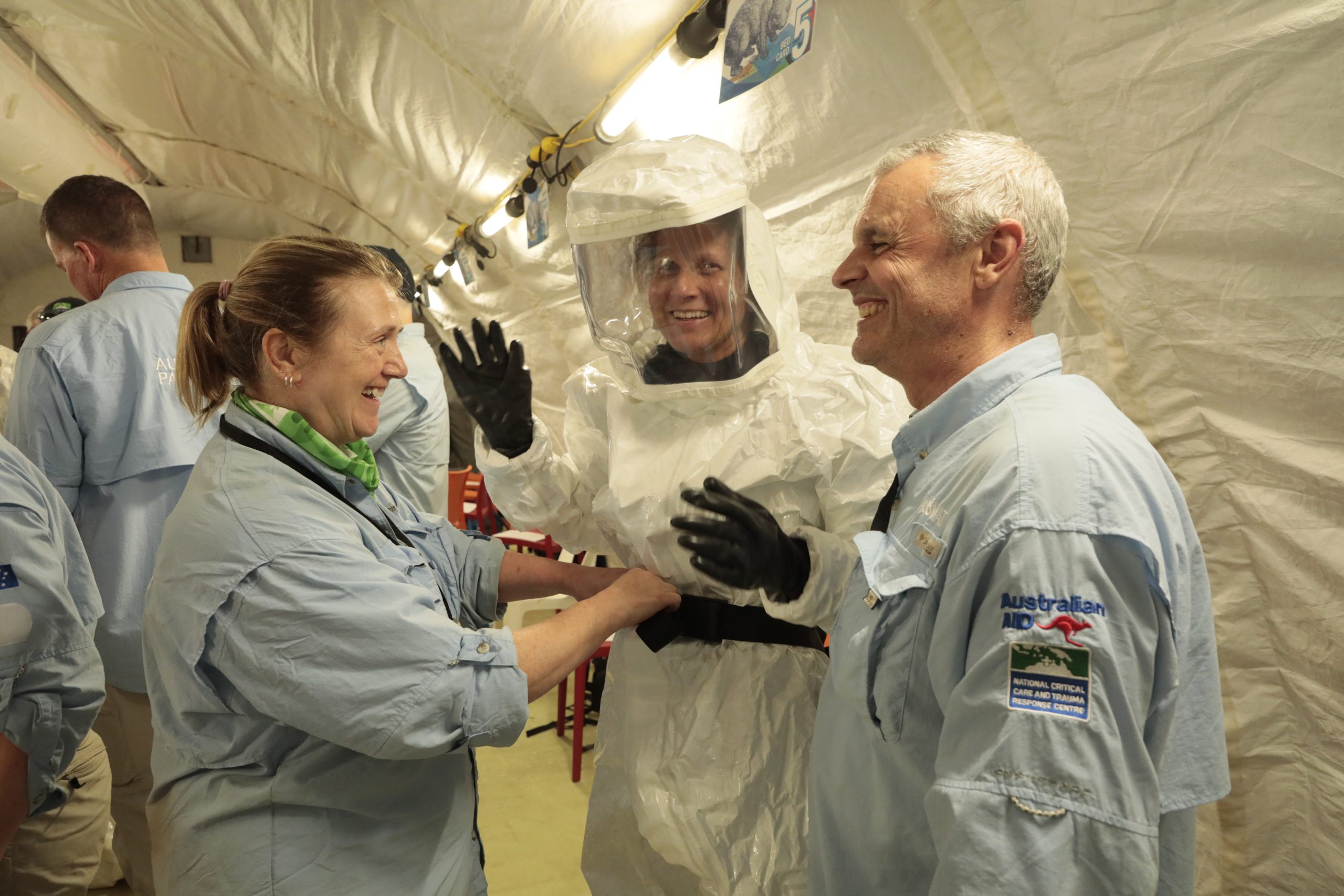
Participants of the recent AUSMAT Team Member Refresher Course took part in a practical training session, focused on the safe use of protective suits and the teamwork required to operate effectively in them. Delivered as part of the AUSMAT National Field Exercise, and funded by the Australian Government, the course gives members who have not previously deployed, or who have not deployed recently, the opportunity to refresh and strengthen their knowledge and skills through online learning, presentations, hands-on workshops and simulations.
Why protective suits matter
The Cat III and Tyvek suits are designed to protect healthcare workers and responders in some of the most hazardous environments. They may be used when treating patients with highly infectious illnesses, such as viral haemorrhagic fevers, or in situations involving harmful chemical agents and other dangerous contaminants.
Jack May, faculty member and senior AUSMAT logistician, emphasised their importance.
These suits are essential for protecting AUSMAT when there’s a risk of infectious diseases or exposure to harmful substances.
Training for resilience and safety
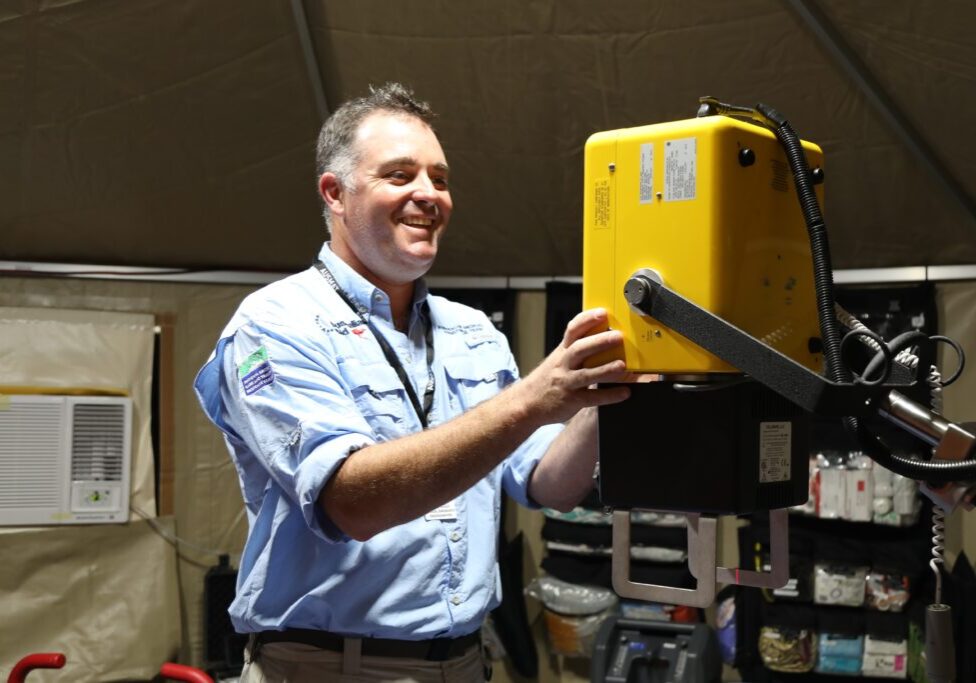
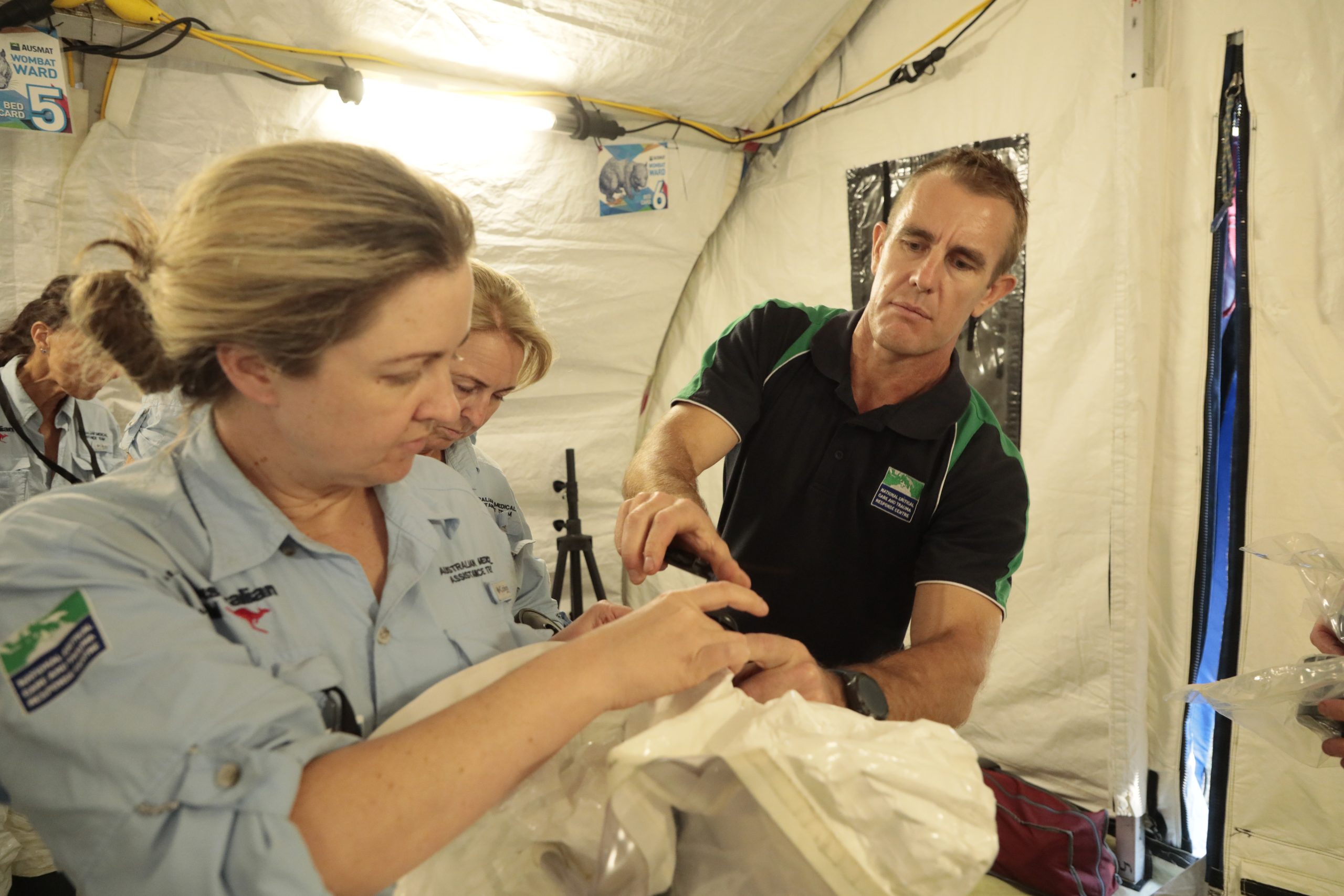
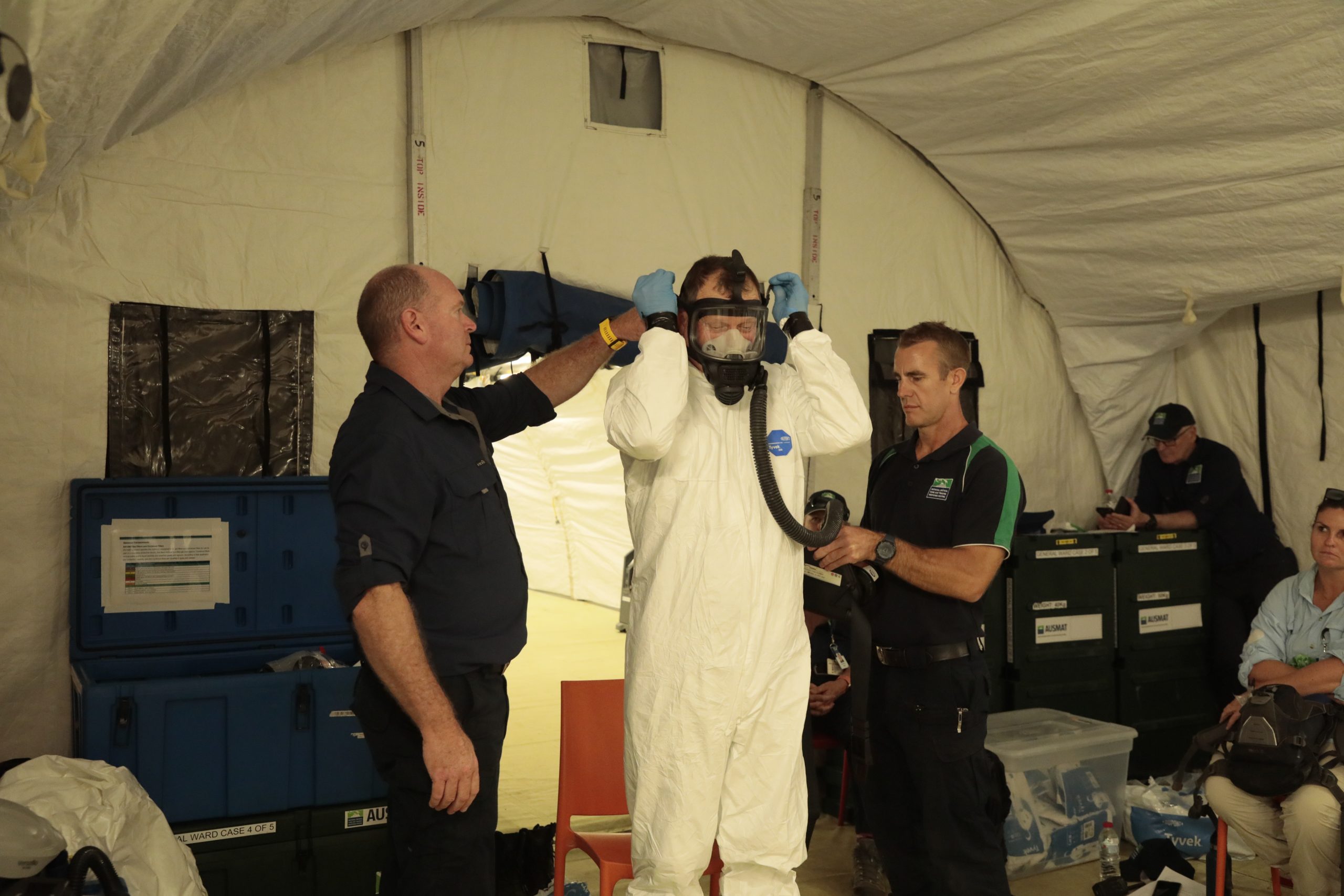
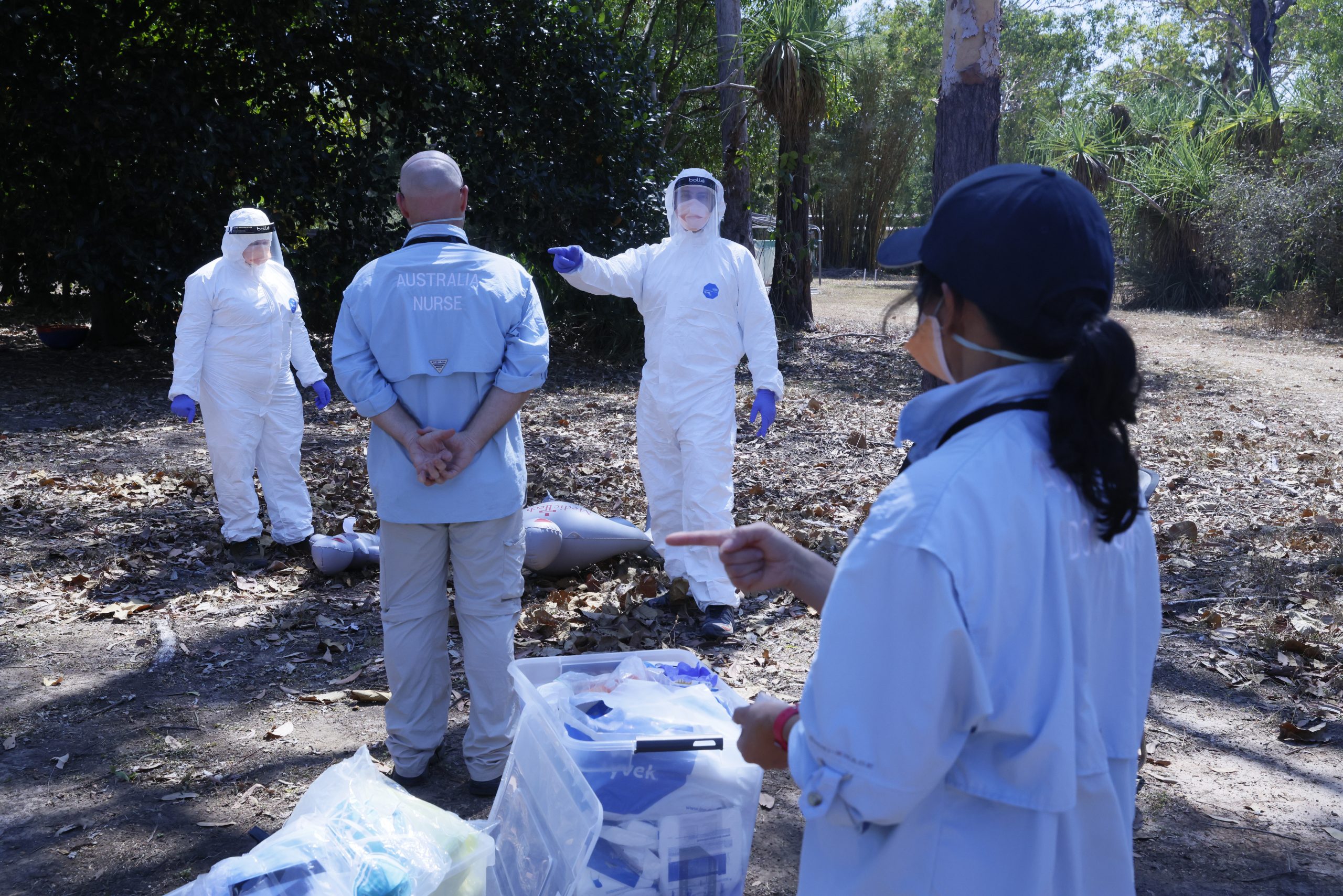
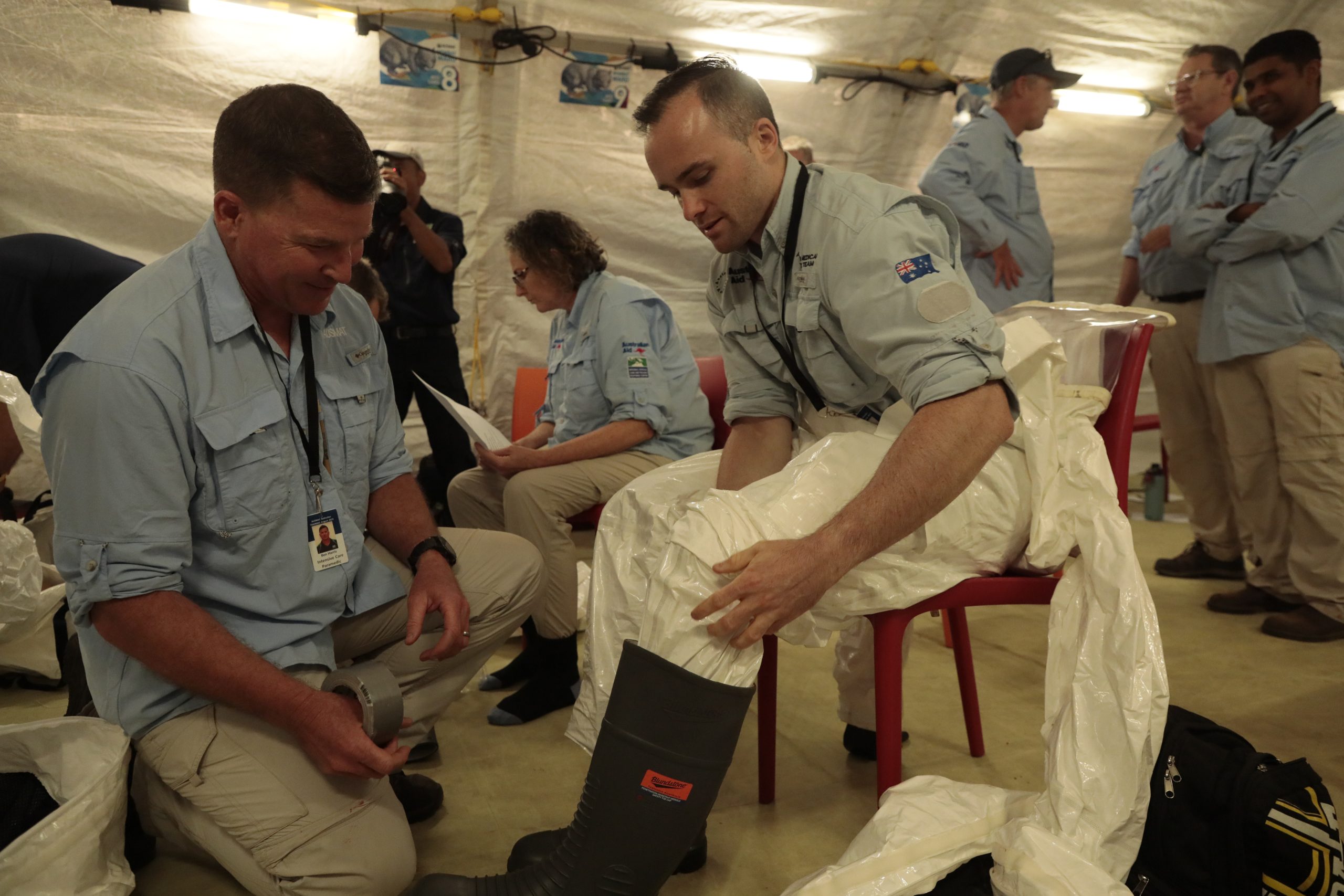
The training, held at the AUSMAT Emergency Medical Team (EMT) Type 2 Surgical Field Hospital combined technical instruction with hands-on practice. Participants were guided through donning and doffing procedures, contamination control drills and communication strategies, all while working in pairs to simulate real deployment conditions.
As Jack explained to the participants, comfort is not the goal — safety is. “There’s no truly comfortable way to wear these suits,” he said. “That’s why planning is so important. We rotate in and out in short periods, work in airconditioned spaces wherever possible and always maintain clear communication with our partner. Hydration and teamwork keep you focused.”
Photos from the session capture both the seriousness of the task and the camaraderie of the team. Whether helping each other adjust seals, practising decontamination steps or sharing a laugh to break the tension, AUSMAT members demonstrated the teamwork that underpins every deployment.
Preparing to respond
Practising in a controlled environment is essential to maintaining confidence in high-pressure situations during deployment.
Rhiannon Winter, Acting Director Education and Strategic Projects, highlighted the importance of preparation. “Training with Cat III and Tyvek protective suits before deployment means that when an emergency comes, AUSMAT can focus fully on patient care and community support, knowing that safety protocols are second nature.”
This preparation is what gives AUSMAT its strength — ensuring members can operate safely, protect one another, and provide critical care under the most demanding conditions.
“Preparation like this makes all the difference. It allows AUSMAT members to go into the field ready — not just for us, but to protect the people we’ve come to support,” Jack added.
As global threats continue to evolve – from emerging infectious diseases to complex humanitarian crises – the National Critical Care and Trauma Response Centre ensures AUSMAT is equipped, prepared and ready to respond through ongoing training and thorough deployment preparedness.