Building readiness: AUSMAT observes advanced biocontainment transport
06 Oct 2025
Written by Dr Anthea Katelaris and Dr Matthew O’Sullivan
In a world where emerging infectious threats demand rapid innovation, observing the latest in biocontainment transport supports AUSMAT’s ongoing efforts in health emergency preparedness. AUSMAT recently took part in Tranquil Passport – a full-scale exercise conducted by the United States’ Administration for Strategic Preparedness and Response (ASPR), a division of the U.S. Department of Health and Human Services (HHS).
The exercise tested the U.S. national readiness for a high-consequence infectious disease (HCID) scenario by simulating the evacuation and care of patients with HCIDs such as Ebola, MERS, or SARS. For AUSMAT, it was a valuable opportunity to observe advanced transport technologies and international response coordination.
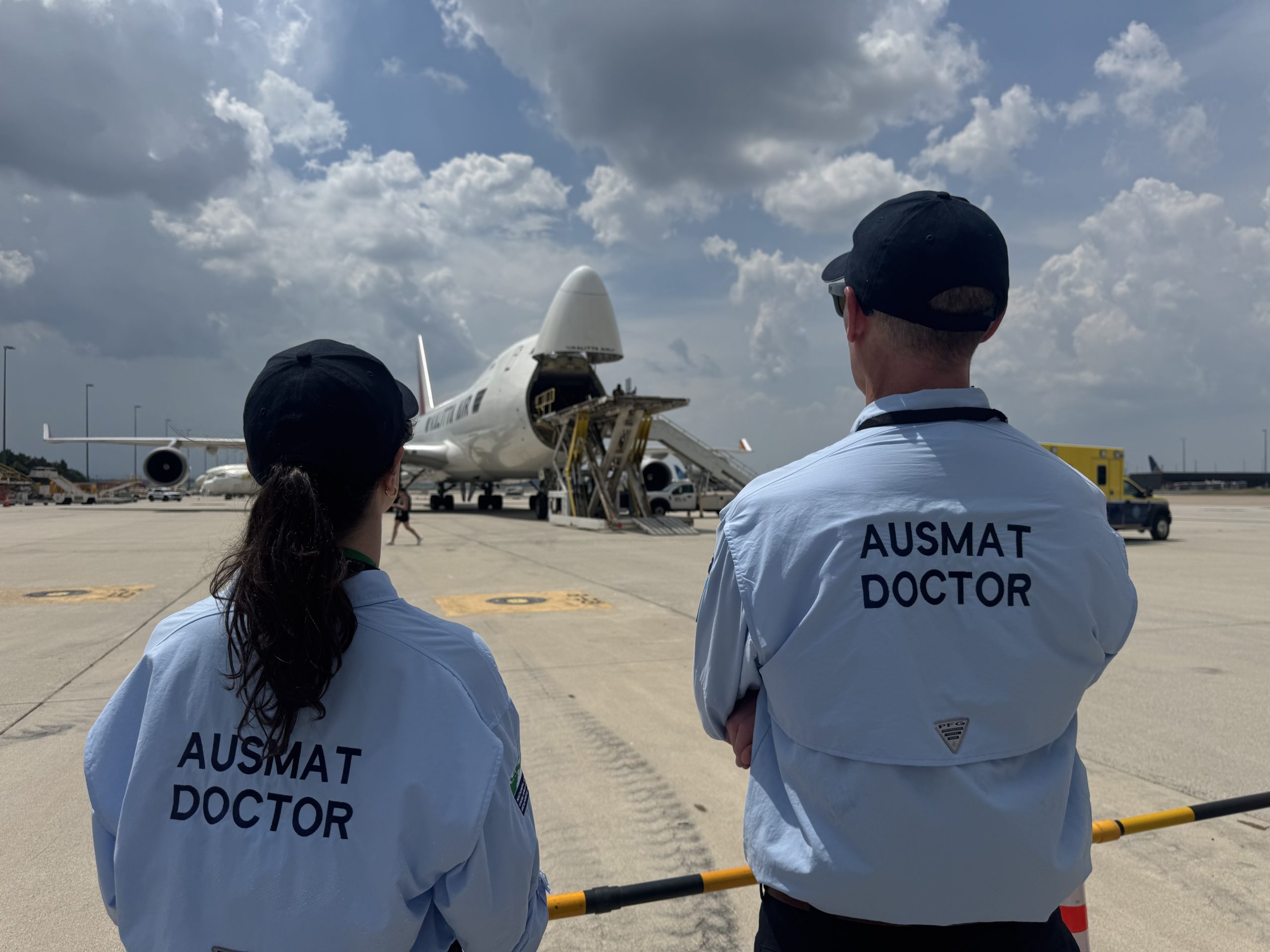
Tranquil Passport bought together over 150 representatives from more than 50 partner organisations, highlighted the importance of collaboration in health security. Alongside AUSMAT, international disaster medical assistance teams from Germany, Japan, South Korea and Taiwan also observed the exercise, reinforcing the value of cross-border, knowledge-sharing efforts aimed at preparing for emerging infectious disease threats. AUSMAT’s participation, funded by the Australian Government, reflects Australia’s commitment to building capacity through international partnerships.
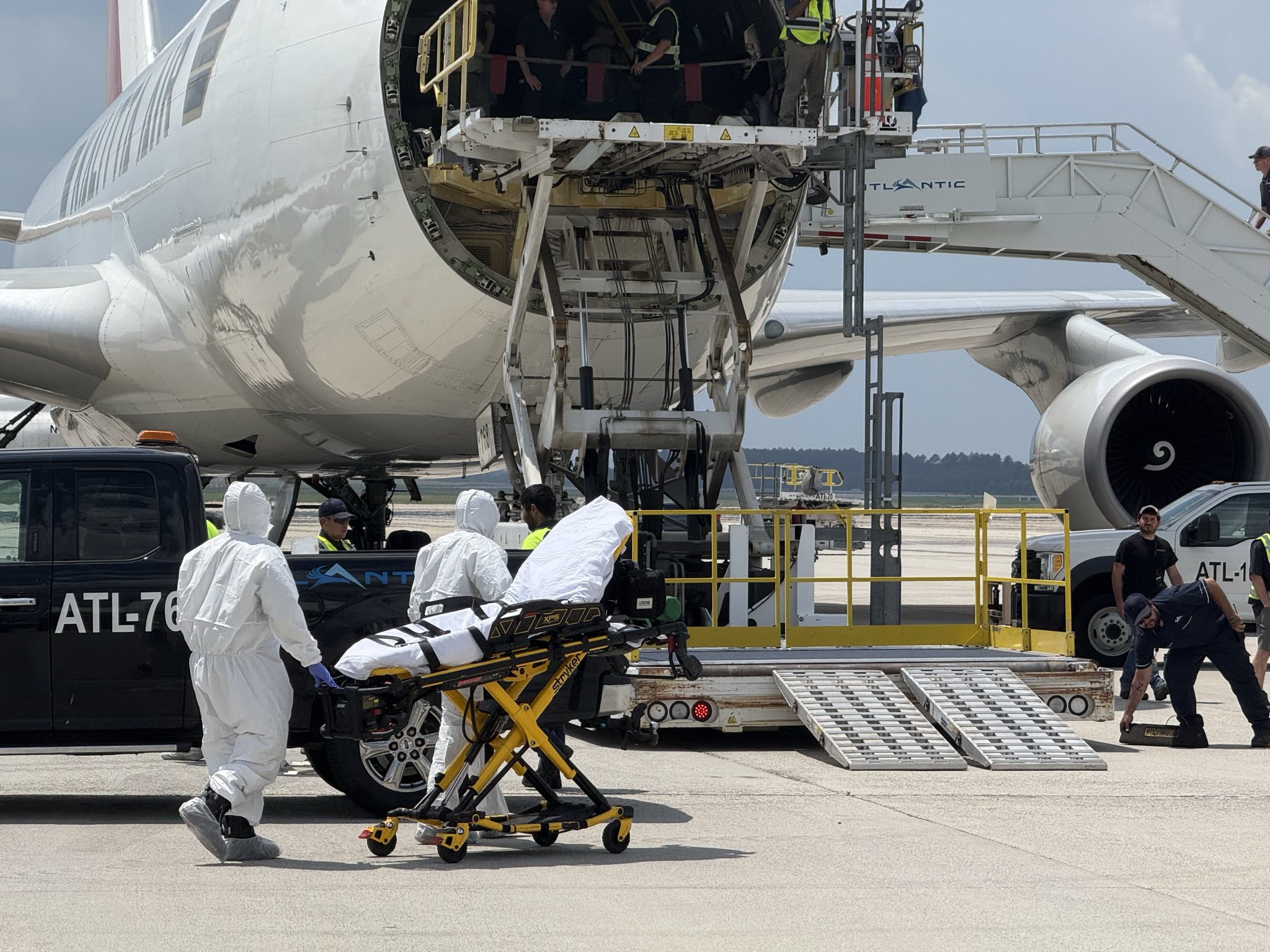
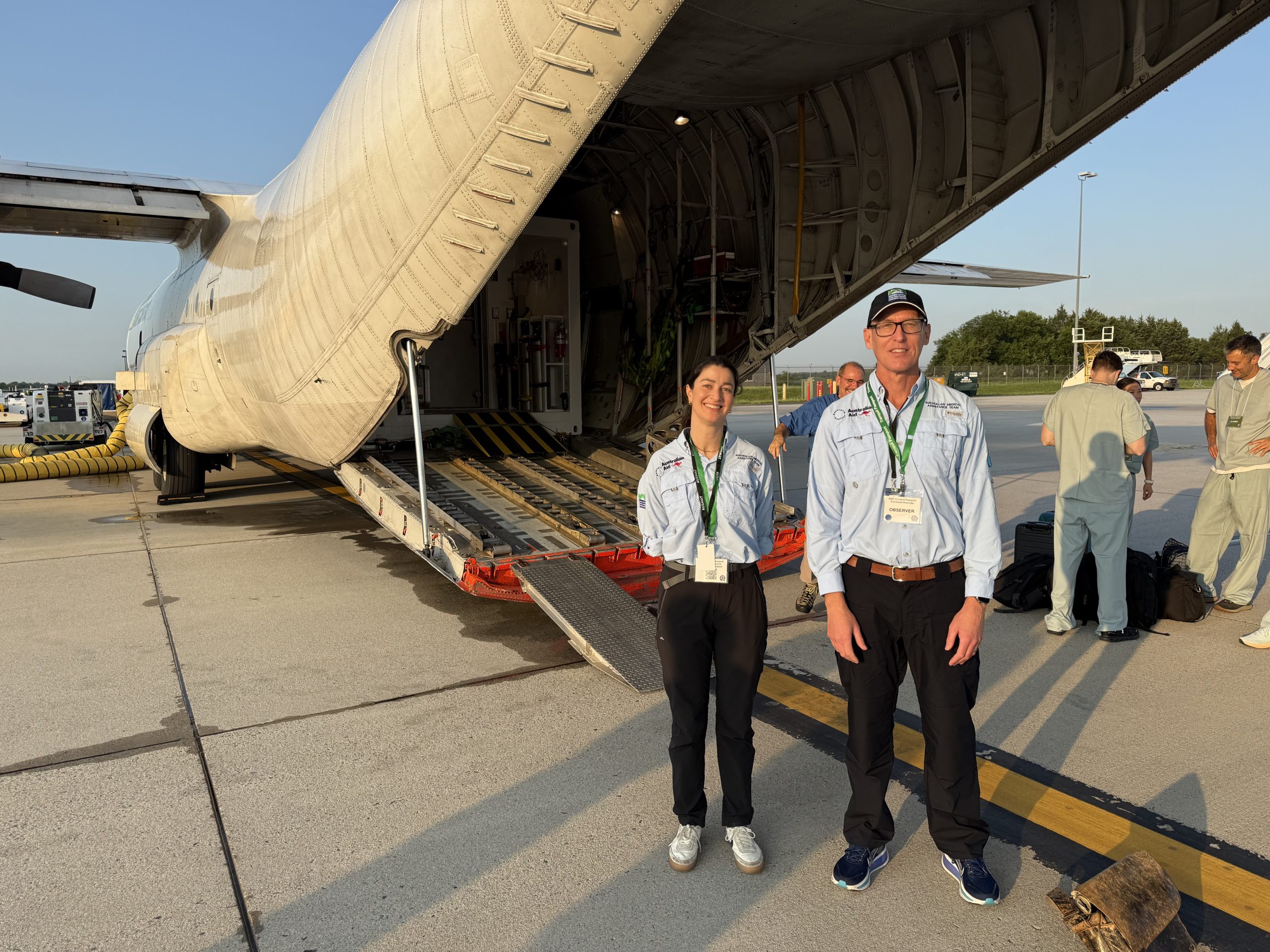
Over four days, the exercise tested the coordinated evacuation of patients during a major international event. AUSMAT members A/Prof Matthew O’Sullivan and Dr Anthea Katelaris observed the arrival of a Boeing 747 carrying the new Portable Biocontainment Unit (PBCU) at Washington Dulles International Airport and the transfer of patients from the unit to ambulances bound for Regional Emerging Special Pathogen Treatment Centres (RESPTCs) across the U.S.
The exercise took place during a heatwave, with temperatures on the tarmac soaring to 38 °C, demonstrating the practical challenges of working in extreme conditions. For AUSMAT, it was an opportunity to see biocontainment systems in action while reflecting on their own training for hot-weather deployments.
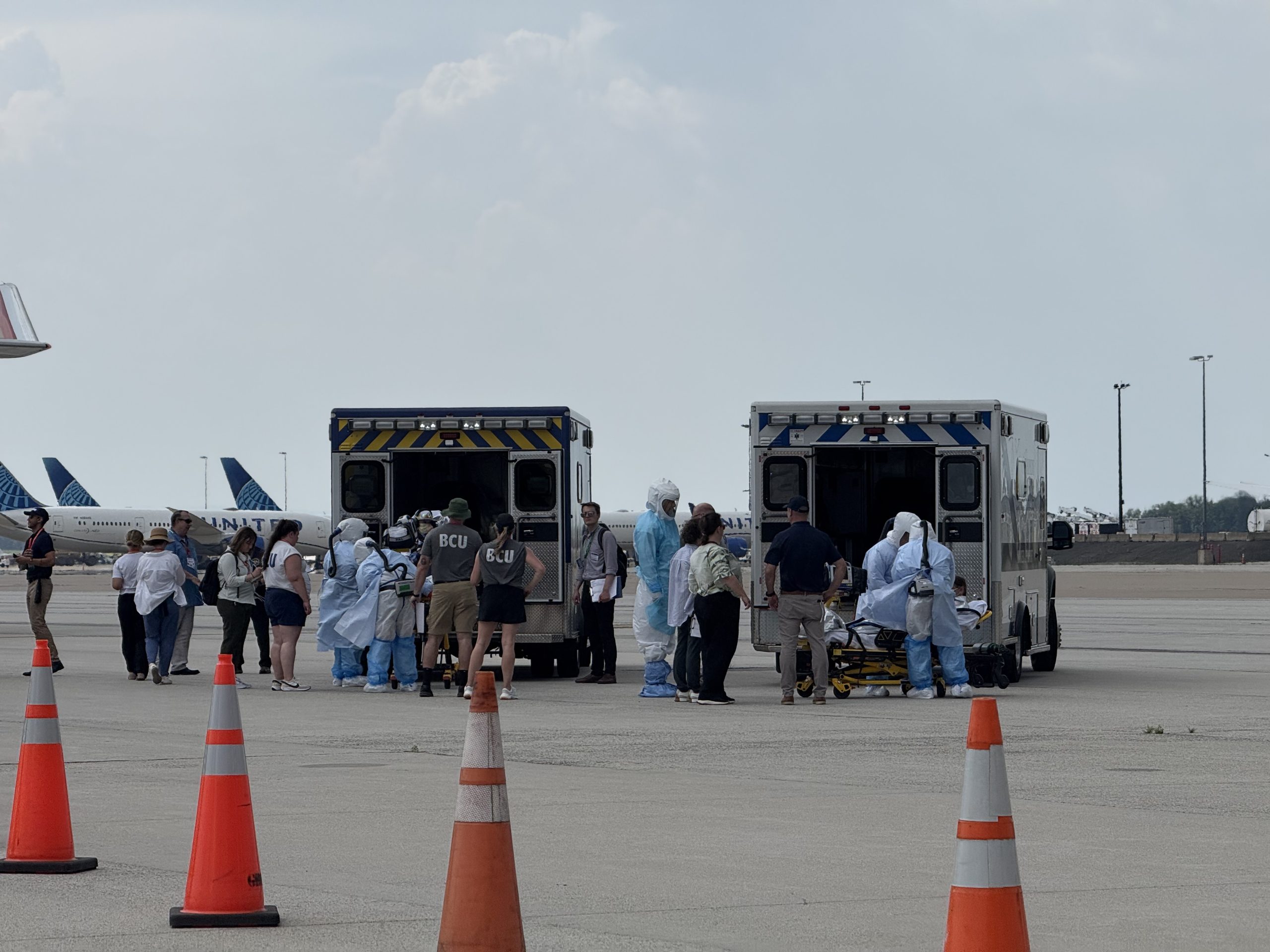
The PBCU was developed in response to lessons learned from the 2014–2016 Ebola outbreak in West Africa, when the need to repatriate American citizens under biosecurity conditions arose. Purpose-built for long-range air or road transport of multiple HCID patients, the PBCU can transport up to two patients on stretcher beds, up to 10 seated patients, or a combination of both.
The concept of biocontainment transport is not new. When Apollo 11 astronauts returned from the first moon landing in 1969, they were quarantined for 21 days in a converted Airstream trailer - an early mobile quarantine facility. The PBCU represents how far this technology has advanced: compact and self-powered, it can operate independently on aircraft such as the C-130 Hercules, enabling deployment to locations with shorter or unprepared runways, including regional or remote areas.
By engaging in international exercises such as Tranquil Passport, AUSMAT continues to strengthen its understanding of emerging technologies and innovative response systems. These insights contribute to Australia’s broader preparedness for health emergencies, reinforcing the importance of collective readiness in protecting communities at home and across the Asia-Pacific region.