Rehabilitation in measles management

20 Mar 2025

Written by Carla Yeung

Measles cases are rising globally, particularly in areas with low vaccination rates. While vaccination is the most effective way to prevent measles, rehabilitation plays a crucial role in managing complications and supporting recovery for those affected.

Rehab
Rehab 2

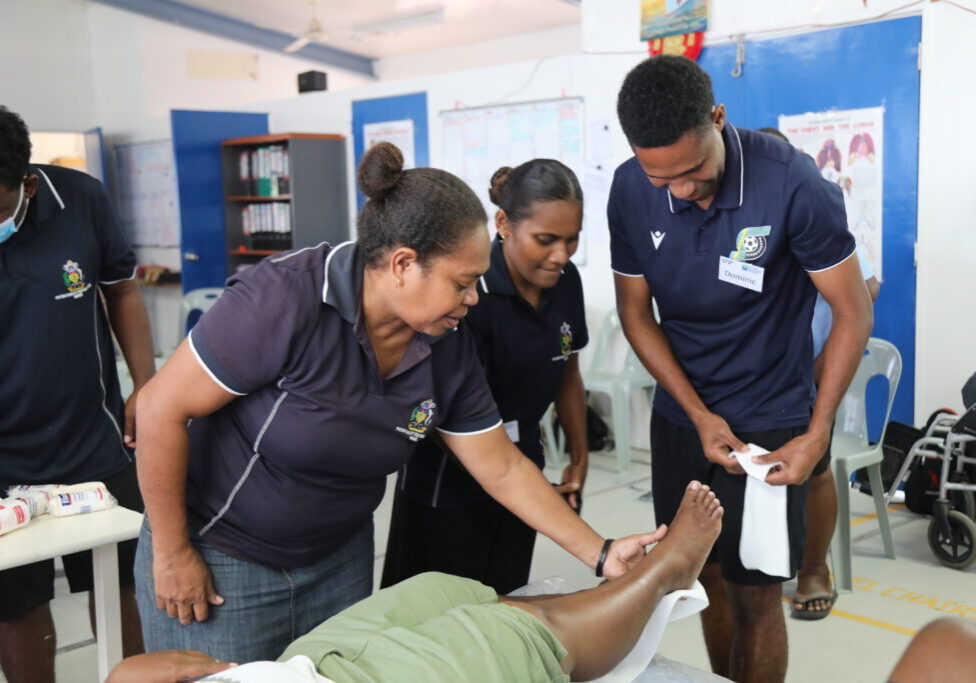
The World Rehabilitation Alliance (WRA), a global network under the World Health Organization (WHO), has released a factsheet highlighting the importance of rehabilitation professionals in measles care. Measles can lead to severe complications, including pneumonia, swallowing difficulties caused by mouth sores, and long-term functional impairments. Rehabilitation professionals can help prevent deterioration, support recovery, and address lasting effects, improving patient outcomes.

Where vaccinations are missed, outbreaks can follow

With measles cases increasing, the WRA is advocating for the inclusion of rehabilitation professionals in outbreak response and broader health system planning. Strengthening vaccination efforts remains the most effective way to prevent measles, but for those affected, rehabilitation is essential to minimising complications and restoring function. To learn more, read: Measles – global outbreaks stemming from a decline in routine vaccine coverage.

As a proud member of the WRA, the National Critical Care and Trauma Response Centre (NCCTRC) supports its mission to promote rehabilitation as an essential health service, strengthen health systems, and improve health and functioning outcomes worldwide.

Visit the WRA website to download the Measles and rehabilitation factsheet.

Next news
Latest news
A cow grazes by the side of the Plenty Hwy near Mount Riddock cattle station in Northern Territory, Australia

Animal attack: animal-related trauma in the Northern Territory

1O3A0279

AUSMAT spotlight on Dave Small: building the next generation of leaders

1O3A0870

Pacific spotlight on Anne Tamata: putting rehabilitation at the centre of emergency response

Picture2

Hantavirus: a rare but significant international outbreak

Baucau 6 2

Bringing accessible critical care education to regional Timor-Leste

Members from the Australian Medical Assistance Team greet Australian and New Zealand passengers from cruise ship MV Hondius after landing at RAAF Base Pearce in Western Australia. *** Local Caption *** On 15 May 2026 Defence supported Whole of Australian Government efforts to repatriate Australian and New Zealand citizens and an Australian permanent resident who were passengers on the cruise ship MV Hondius after an outbreak of hantavirus onboard. Defence facilitated their arrival via charter aircraft at RAAF Pearce and transfer to a Western Australian quarantine facility under the care of health authorities. Defence assisted under Australian Government Crisis Management Framework provisions for the repatriation of Australian citizens and approved foreign nationals. Photo credit: Department of Defence

NCCTRC leads national quarantine facility following hantavirus outbreak

Previous stories
 74A2819

Managing risk in the field: vector and pest control at the AUSMAT Health Logistics course

News Tile

Promoting rehabilitation in emergencies: a global collaboration

AUSMAT; Australian Medical Assistance Team; NCCTRC; National Critical Care and Trauma Response Centre

Assistance to Kiribati as the Pacific region reopens international borders

The Australian Medical Assistance Team inserted into Tacloban set up the Mobile Medical/Surgical Facility.  *** Local Caption *** Following a request for support from the Philippines Government and commitment from the Australian Government to provide assistance, the Australian Defence Force has established OPERATION PHILIPPINES ASSIST to support international Humanitarian and Disaster Relief (HADR) operations. This activity is being conducted under OPERATION PHILIPPINES ASSIST is commanded by Headquarters Joint Operations Command.

AUSMAT to test world-class field hospital in National Field Exercise

AUSMAT; Australian Medical Assistance Team; NCCTRC; National Critical Care and Trauma Response Centre

“Strength and resilience” in Fiji’s maternity wards