The NCCTRC Research Strategy 2025-2030: roadmap for health emergency response research, evaluation and innovation
30 Mar 2026
Written by Dr Jutta Marfurt
Reviewed by Dr Bhavya Balasubramanya
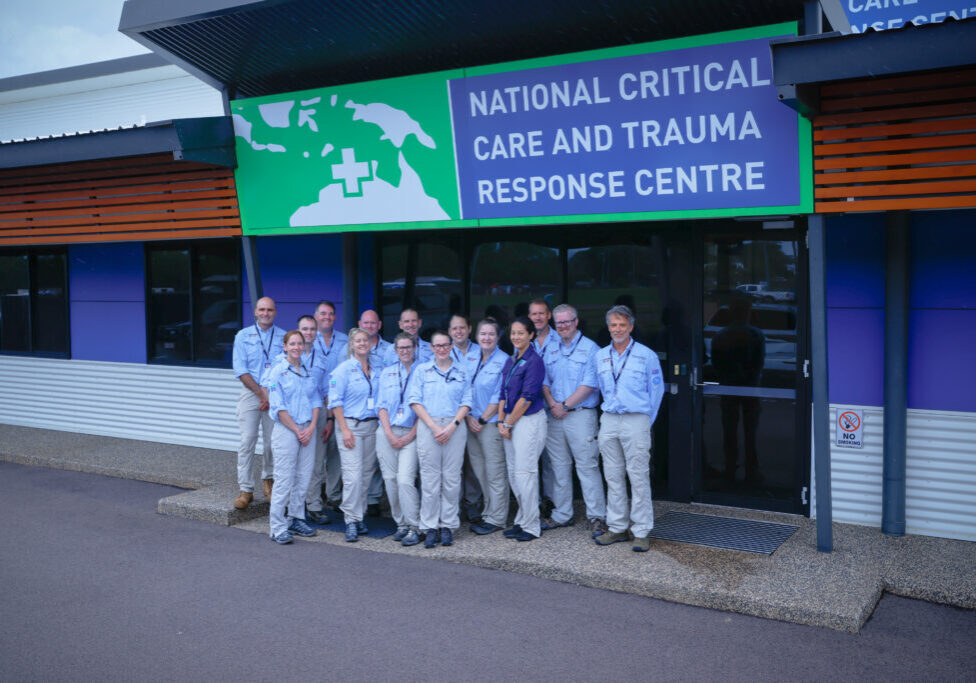
The launch of the National Critical Care and Trauma Response Centre (NCCTRC) Research Strategy 2025-2030 marks a significant milestone. Developed through a whole-of-centre consultation process, the strategy provides a roadmap to guide research, evaluation and innovation in health emergency preparedness and response.
Delivering effective national and international emergency health responses requires the Australian Medical Assistance Team (AUSMAT) and NCCTRC’s multidisciplinary capabilities to be guided by ethical, robust research and evidence-based best practice.
The NCCTRC conducts research across several priority areas, including:
- effective teaching and training of AUSMAT members
- operational processes and implementation strategies across the Centre and AUSMAT
- disaster preparedness and emergency medical response
- trauma and injury surveillance and management in the Northern Territory (NT)
- capacity building for Emergency Medical Team (EMT) preparedness, trauma response and rehabilitation capability in the region.
The Centre is committed to translating its research into practical outcomes across education and training, deployment practice, trauma management, and rehabilitation, while sharing its expertise nationally and globally.


Developing the strategy
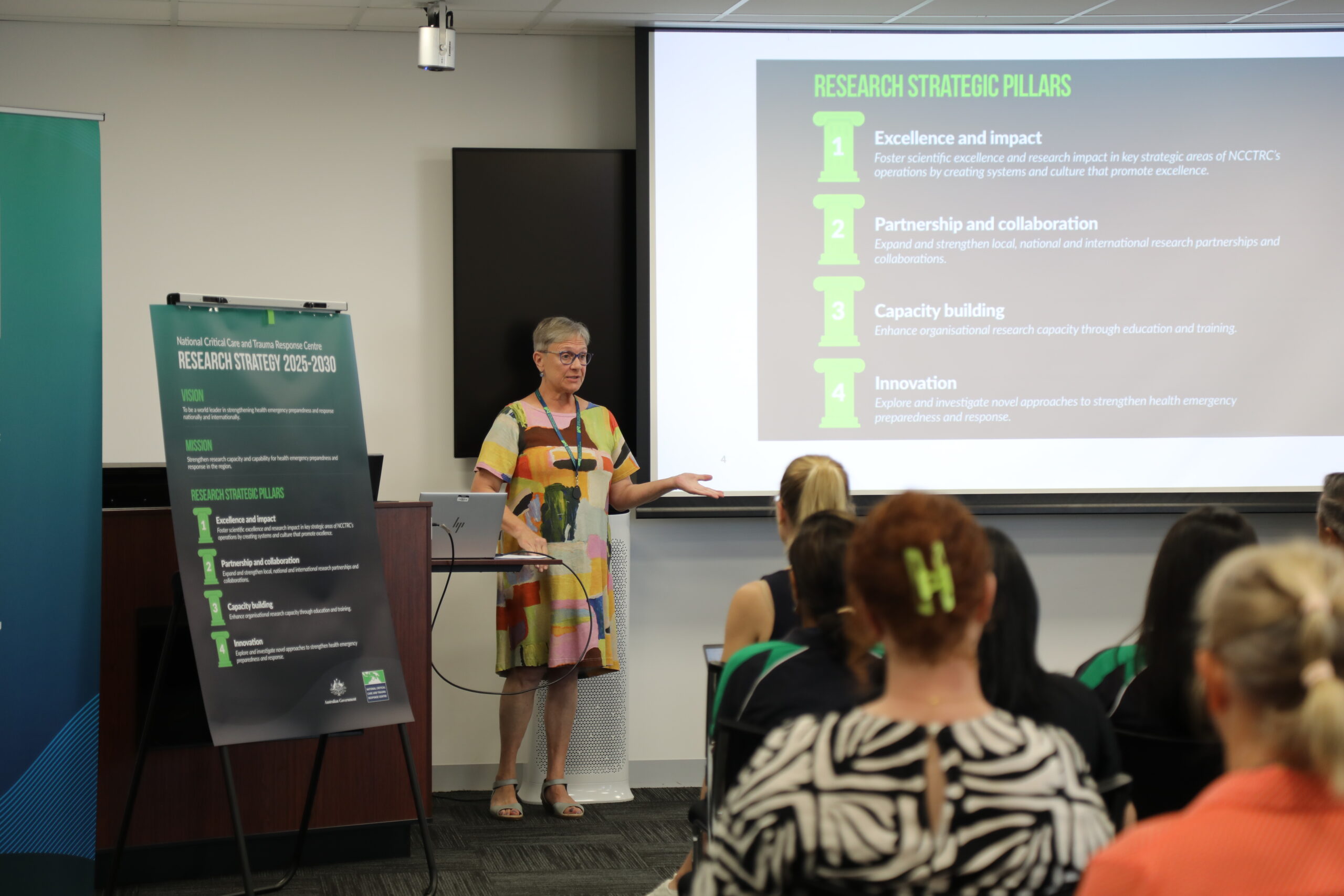
The strategy is a practical tool that supports accountability and strengthens the quality of the NCCTRC’s work.
Research completes the loop by providing a clear framework to monitor, review and continually improve all aspects of NCCTRC operations – from directorate operations to the training delivered.
“It anchors NCCTRC activities to national priorities, advances the direction of the World Health Organization’s (WHO) EMT 2030 Strategy and ensures services remain responsive to the needs of the communities affected by health emergencies,” NCCTRC Executive Director Professor Len Notaras AO explained.
Research priorities were established following a modified research prioritisation framework derived from the Australian Clinical Trials Alliance (ACTA)1 and the Cochrane Review Centre frameworks2. The development process included several key steps:
Formation of a Research Strategy Development (RSD) Leadership Team (LT)
Agreement on the scope and objectives of the NCCTRC Research Strategy
Identification of key stakeholders within the NCCTRC
Consultation of key stakeholders within the NCCTRC via an online survey
Consultation of the RSD LT members after presentation of the stakeholder survey results
Development of research selection criteria based on:
- relevance
- appropriateness
- feasibility
- significance
- value for money
Scoring of research areas and topics
Establishment of research priorities summarised in the NCCTRC Research Strategy.
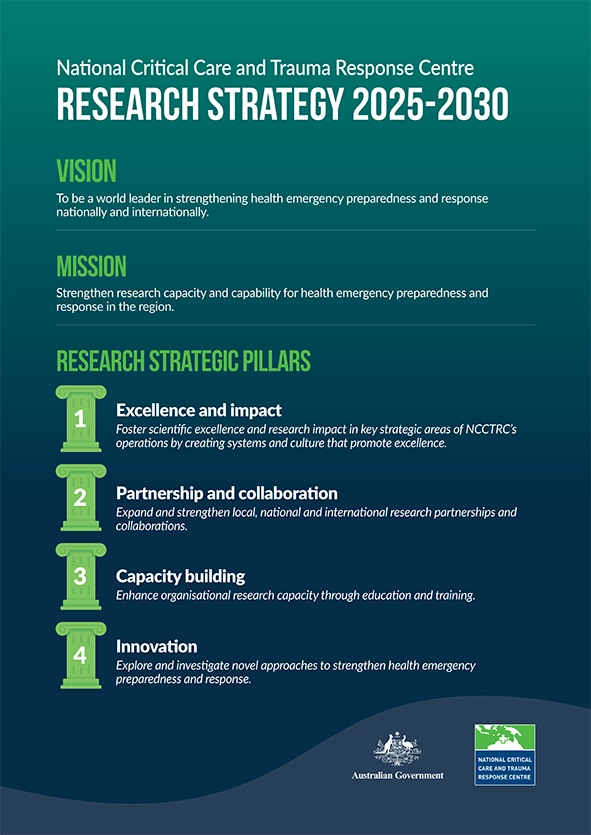
The strategy at a glance
Research policy guidelines
Research undertaken by the NCCTRC adheres to the principles and responsibilities of the Australian Code for the Responsible Conduct of Research (the 2018 Code).3
In alignment with the strategy, research policy guidelines were established to formalise the principles, governance requirements and procedural standards for the development, conduct and reporting of research.
| Core principles | Actions and applications |
|---|---|
| Quality |
|
| Ethics |
|
| Safety |
|
| Dignity and privacy |
|
| Risk management |
|
| Financial management |
|
The Research Governance Committee
The NCCTRC Research Policy Guidelines provide the framework that ensures research projects are conducted ethically, safely and in compliance with relevant regulations and policies.
To support the implementation of these guidelines, the NCCTRC established a Research Governance Committee (RGC) to provide oversight of research activities across the Centre. Key responsibilities of the NCCTRC RGC include:
- quality oversight – ensuring rigorous ethical and scientific reviews
- regulatory compliance – maintaining alignment with laws, policies and the 2018 Australian Code for the Responsible Conduct of Research
- risk and resource management – managing risk, research credentialing and financial oversight.
The RGC also consult the Executive team and nominated external research experts to support the review and oversight of research activities. This collaborative approach ensures all research is developed, conducted and reported in line with the highest standards of integrity.
Led by the NCCTRC Public Health team, the inaugural meeting of the RGC recently took place to bring the strategy into action.
The RGC members are Dr Jutta Marfurt (Chair), Anthony Cook, Dr Chatu Yapa, Heather Stapleton, Kath McDermott, Lizzy Ross, Melanie Morrow, Michelle Fielding and Thomas Cherian.
“Joining the RGC was a natural step in the NCCTRC Disaster, Preparedness and Response team’s (DPRT) commitment to excellence,” Acting Director DPRT Kath McDermott shared. "We are formalising our processes to ensure every project meets the highest ethical standards while driving innovation in health emergency response."
Next steps
Work on various research and evaluation projects across the NCCTRC has commenced. The introduction of a Research Seminar Series alongside more robust research administrative structures and support will strengthen further the Centre’s research capacity.
“The strategy establishes a unified direction across the organisation,” Kath noted.
“Over the next five years, it will serve as a roadmap, reinforcing the NCCTRC’s commitment to evidence-based practice, innovation and readiness for health emergencies.”
References
- Australian Clinical Trials Alliance (ACTA). 2020. Research Prioritisation Framework. https://clinicaltrialsalliance.org.au/wp-content/uploads/2020/02/Research-Prioritisation-Framework-FINAL.pdf
- Nasser M., Ueffing E., Welch V., Tugwell P. An equity lens can ensure an equity-oriented approach to agenda setting and priority setting of Cochrane Reviews. J Clin Epidemiol. 2013 May;66(5):511-21. doi: 10.1016/j.jclinepi.2012.11.013. Epub 2013 Mar 9. https://www.sciencedirect.com/science/article/abs/pii/S0895435613000164
- National Health and Medical Research Council (NHMRC). The Australian Code for the Responsible Conduct of Research, 2018 (the 2018 Code). https://www.nhmrc.gov.au/about-us/publications/australian-code-responsible-conduct-research-2018