Hantavirus: a rare but significant international outbreak
02 Jul 2026
Written by Dr Jutta Marfurt
Reviewed by Dr Bhavya Balasubramanya
Overview
The recent cluster of hantavirus infections linked to a cruise ship has highlighted how an uncommon zoonotic infection can generate disproportionate global public health consequences, requiring a coordinated international and multi-agency response guided by the International Health Regulations (IHR).1,2
The hantavirus outbreak was declared by the World Health Organization (WHO) on 2 May 2026, after a cluster of passengers with severe respiratory illness aboard the M/V Hondius cruise ship, carrying 147 passengers and crew from 23 different countries, had been reported.1,3
As of 2 July 2026, a total of 13 cases (12 confirmed and one probable case), including 3 deaths, have been reported with no described cases in Australia (Figure 1).3,4 The case fatality ratio is 23%.
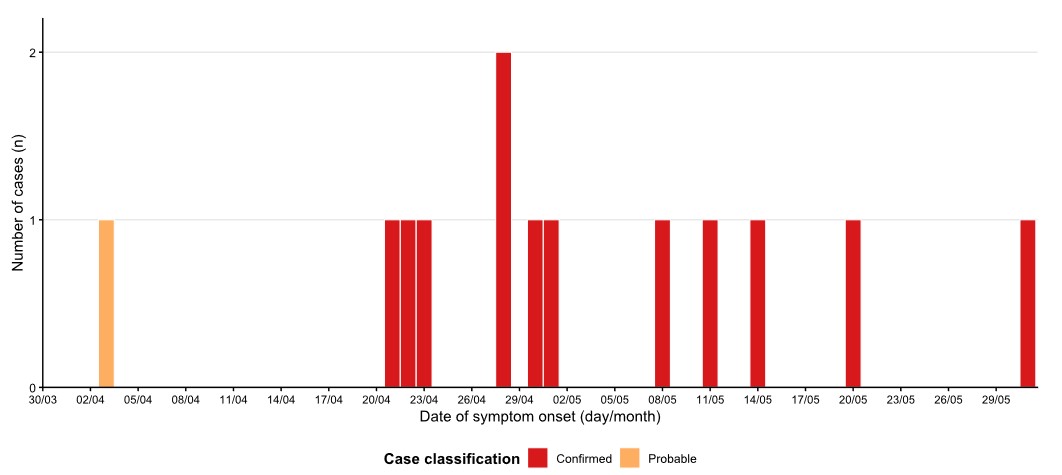
Figure 1: Epidemiological curve of Andes hantavirus cases (n = 13) reported to the World Health Organization as of 2 July 2026. Hantavirus outbreak linked to cruise ship travel, Multi-locations. World Health Organization.
Hantavirus disease
Hantavirus disease is a severe and potentially fatal viral illness primarily transmitted through contact with infected rodents. Humans are incidental host of the disease.
New World hantaviruses, primarily found in the Americas, can cause Hantavirus Cardiopulmonary Syndrome (HCPS), which affects the lungs and the cardiovascular system. Old World hantaviruses which circulate mainly in Europe and Asia, can cause Haemorrhagic Fever with Renal Syndrome (HFRS), which primarily affects the kidneys.5,6
Symptoms
In both syndromes, early non-specific symptoms resemble a flu-like illness which typically begin 1-8 weeks after exposure to the virus with a median of 18 days.7
Symptoms include:
- fever and chills
- severe muscle aches especially in thighs, hips and back
- headaches and dizziness
- fatigue and general weakness
- gastrointestinal issues such as nausea, vomiting, diarrhea or abdominal pain (Figure 2).5,6,8
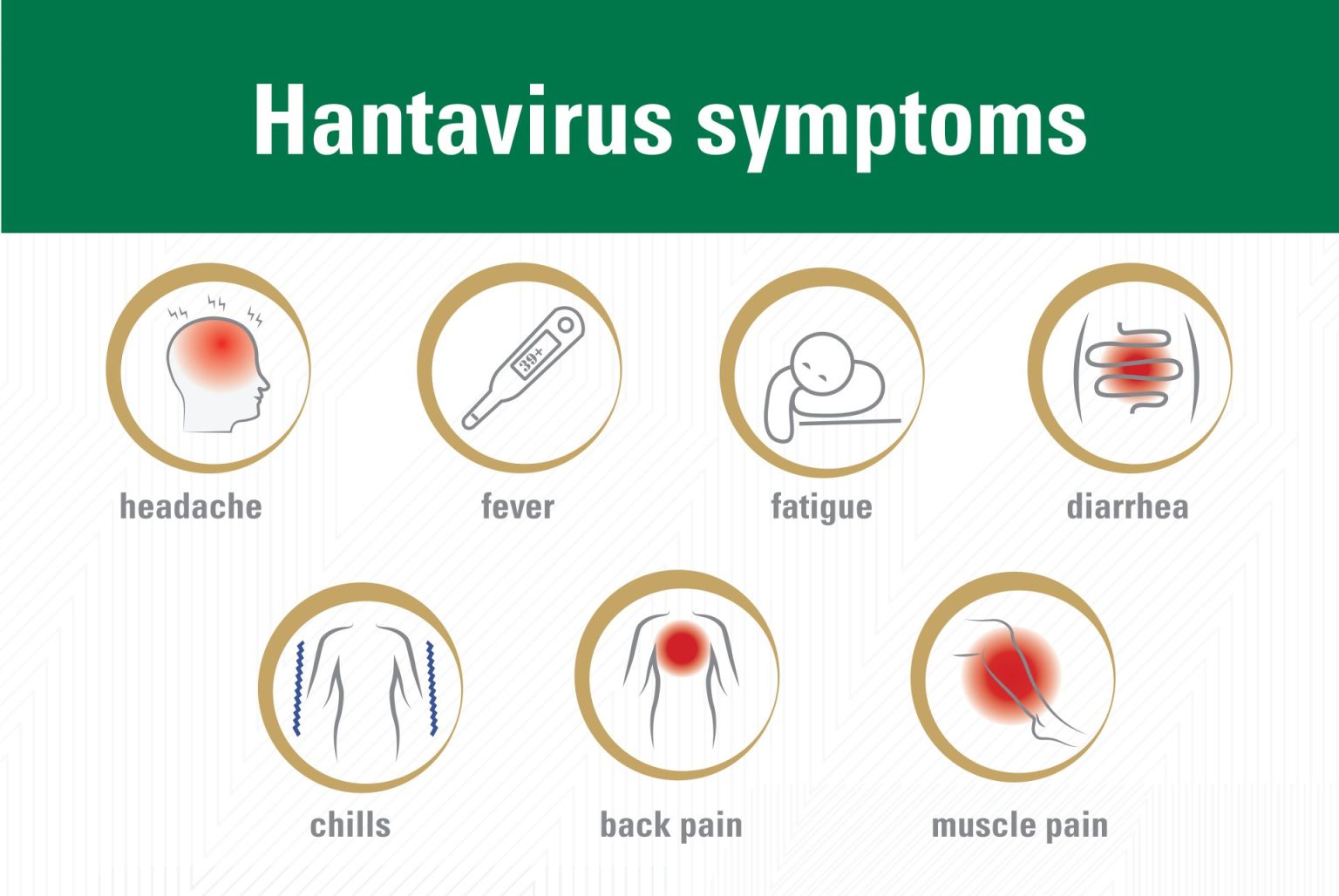
Figure 2: Symptoms of early-stage hantavirus infection. Africa Centre for Disease Control and Prevention.
Late-stage HCPS symptoms include:
- coughing and severe shortness of breath
- chest tightness
- rapid progression to respiratory failure requiring urgent emergency care.
Late-stage HFRS symptoms include:
- low blood pressure and acute shock
- blurred vision, flushing of the face or a rash
- internal bleeding or vascular leakage
- acute kidney failure.7
HCPS has a high case fatality rate of 35-50% while case fatality rates for HFRS vary depending on the strain, from less than 1% for milder European strains to 5-15% for more severe Asian strains.5
Diagnosis and treatment
Initial clinical diagnosis of hantavirus infection can be confirmed by 2 laboratory methods.
Hantavirus-specific immunoglobulins (i.e., antibodies produced by the immune system to identify and neutralize foreign bodies such as bacteria, viruses, and toxins), Immunoglobulin M (IgM) and Immunoglobulin G (IgG) are usually present when symptoms begin and can be detected by enzyme-linked immunosorbent assays (ELISA) on serum or plasma.
IgM antibodies are detectable 7-14 days after infection, indicating acute or recent infection, which is crucial for early diagnosis of HFRS or HCPS.
IgG antibodies appear 2-4 weeks after infection and persist for several years, indicating past exposure. However, IgG antibodies alone are not sufficient for a definite diagnosis, confirmatory serological diagnosis requires both IgG and IgM positivity.10,11,12
Reverse transcription-polymerase chain reaction (RT-PCR) tests detect the presence of viral genomes in serum, plasma or nasopharyngeal swab samples. It is highly effective during the acute phase of the illness, although a PCR-negative test result does not entirely rule out the disease.10,13,14
Specimens sent to a reference laboratory for hantavirus testing must be prepared using the triple packaging system to prevent leakage or exposure during transit. Shipment requires strict adherence to international and national hazardous materials regulations and must be classified as Category B (Biological Substance) under UN 3373.15,16
There is no specific antiviral treatment or cure for hantavirus disease. Management relies entirely on early, intensive supportive care to manage symptoms, support vital organ function and allow the immune system to respond to the disease.
Because hantavirus symptoms can escalate rapidly from flu-like symptoms into severe cardiopulmonary or kidney distress, prompt medical attention is critical. Hospitalisation is usually required, with treatments focused on cardiovascular and fluid management and kidney, oxygen and respiratory support. Referral to a centre with extracorporeal membrane oxygenation (ECMO) facilities is recommended.11,12
Transmission and prevention
The zoonotic hantavirus disease is primarily transmitted by inhaling airborne particles contaminated with the urine, droppings or saliva of infected rodents such as mice, voles and rats (Figure 3).17
The Andes virus, a hantavirus species, can be transmitted between people with close prolonged contact. Human-to-human transmission is rare and considered low risk, as evidenced by locally confined outbreak reports from endemic countries.17,18,19
Because the recent hantavirus outbreak linked to the M/V Hondius cruise ship was confirmed to involve Andes virus, the potential for limited human-to-human transmission warranted a WHO-coordinated global response.
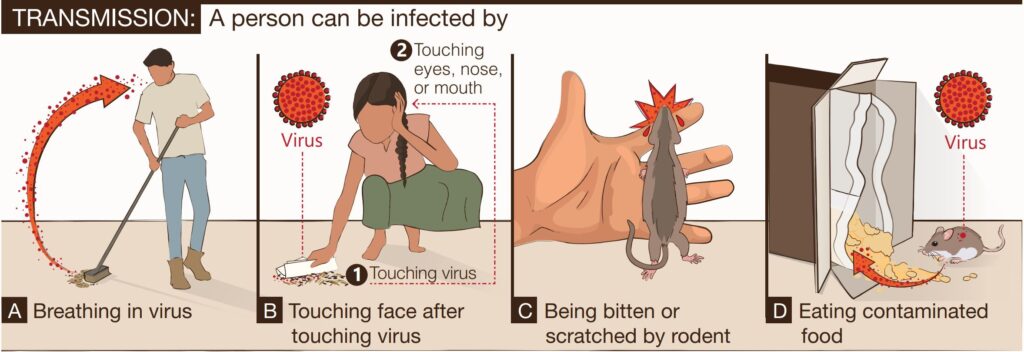
Figure 3: Transmission of hantavirus. United States Centres for Disease Control and Prevention.
To avoid hantavirus infection, primary protective measures focus on avoiding contact with infected rodents, rodent droppings and preventing infestations in dwellings. The most effective preventive methods include:
- safe cleaning and disposing of rodent droppings and nest
- rodent-proofing homes by sealing entry points, storing food in airtight containers and keeping woodpiles away from walls
- avoiding rodent burrows and nests during outdoor activities
- practising good personal hygiene.
People experiencing early symptoms or those who have been in close contact with a suspected or confirmed case of hantavirus infection should wear a medical mask and self-isolate while seeking medical advice to reduce the risk of potential transmission.10,17,18,19
References
- World Health Organization (WHO). Disease Outbreak News, Hantavirus cluster linked to cruise ship travel, Multi-locations. https://www.who.int/emergencies/disease-outbreak-news/item/2026-DON611
- World Health Organization (WHO). International Health Regulations https://iris.who.int/server/api/core/bitstreams/1632f577-e897-4da2-8d4b-d0d37751b65c/content
- Environmental Systems Research Institute. ANDV Hantavirus 2026. https://www.arcgis.com/apps/dashboards/5c68442d2afc42d7ba2696e4cd393729
- Australian Centre for Disease Control (CDC). Hantavirus infection situation reports. https://www.cdc.gov.au/resources/collections/hantavirus-infection-situation-reports
- World Health Organization (WHO). Hantavirus Fact sheets. https://www.who.int/news-room/fact-sheets/detail/hantavirus
- Government of Canada. Hantaviruses. https://www.canada.ca/en/public-health/services/diseases/hantaviruses.html
- Vial PA, Valdivieso F, Mertz G, Castillo C, Belmar E, Delgado I, Tapia M and Ferrés M. (2006) Incubation period of hantavirus cardiopulmonary syndrome. Emerg Infect Diseases 12(8):1271-3. doi: 10.3201/eid1208.051127
- African Centre for Disease Control. News Statements. https://africacdc.org/news-item/statement-on-multi-country-hantavirus-cluster-associated-with-cruise-ship-travel/
- Vial PA, Ferrés M, Vial C, Klingström J, Ahlm C, López R, Le Corre, N and Mertz GJ. (2023) Hantavirus in humans: a review of clinical aspects and management. Lancet Infect Diseases 23: e371–82. doi: 10.1016/S1473-3099(23)00128-7
- United States Centers for Disease Control and Prevention (CDC). Clinician Brief: Hantavirus Pulmonary Syndrome (HPS). https://www.cdc.gov/hantavirus/hcp/clinical-overview/hps.html
- Obando-Rico CJ, Valencia-Grajales YF and Bonilla-Aldana DK. (2023) Prevalence of orthohantavirus in rodents: A systematic review and meta-analysis. Travel Med Infect Diseases 51:102504. doi: 10.1016/j.tmaid.2022.102504
- Ekanayake E, Govinna M, Wakkumbura S, Samarajeewa Y, Arachchige N, Weerathunga A, Rajamanthri L, Ranawaka G, Pattiyakumbura T, Dasanayake D and Muthugala R. (2025) Detection of probable hantavirus infections in clinically suspected dengue patients in a tertiary care hospital in Sri Lanka. BMC Infect Diseases 25(1):1193. doi: 10.1186/s12879-025-11617-8.
- Goodfellow SM, Nofchissey RA, Ye C, Dunnum JL, Cook JA and Bradfute SB. (2022) Use of a Novel Detection Tool to Survey Orthohantaviruses in Wild-Caught Rodent Populations. Viruses. 14(4):682. doi: 10.3390/v14040682
- Victorian Infectious Diseases Reference Laboratory (VIDRL). Test Handbook, Hantavirus PCR. https://www.vidrl.org.au/resources/test-handbook/tests/
- Australian Commission on Safety and Quality in Health Care (ACSQHC), National Safety and Quality Health Service (NSQHS) Standards. (2022) Requirements for the packaging and transport of pathology specimens and associated materials. https://www.safetyandquality.gov.au/resources/requirements-packaging-and-transport-pathology-specimens-and-associated-materials-fifth-edition
- International Air Transport Association (IATA). (2026) Dangerous Goods Regulations, Division 6.2 — Infectious Substances. https://www.iata.org/contentassets/b08040a138dc4442a4f066e6fb99fe2a/dgr-66-en-3.6.2.pdf
- United States Centers for Disease Control and Prevention (CDC). Hantavirus Prevention. https://www.cdc.gov/hantavirus/prevention/index.html
- Padula PJ, Edelstein A, Miguel SD, López NM, Rossi CM and Rabinovich RD. (1998) Hantavirus pulmonary syndrome outbreak in Argentina: molecular evidence for person-to-person transmission of Andes virus. Virology 241(2):323-30. doi: 10.1006/viro.1997.8976
- Alonso DO, Pérez-Sautu U, Bellomo CM, Prieto K, Iglesias A, Coelho R, Periolo N, Domenech I, Talmon G, Hansen R, Palacios G and Martinez VP. (2020) Person-to-Person Transmission of Andes Virus in Hantavirus Pulmonary Syndrome, Argentina, 2014. Emerg Infect Diseases 26:756–9. doi: 10.3201/eid2604.190799